
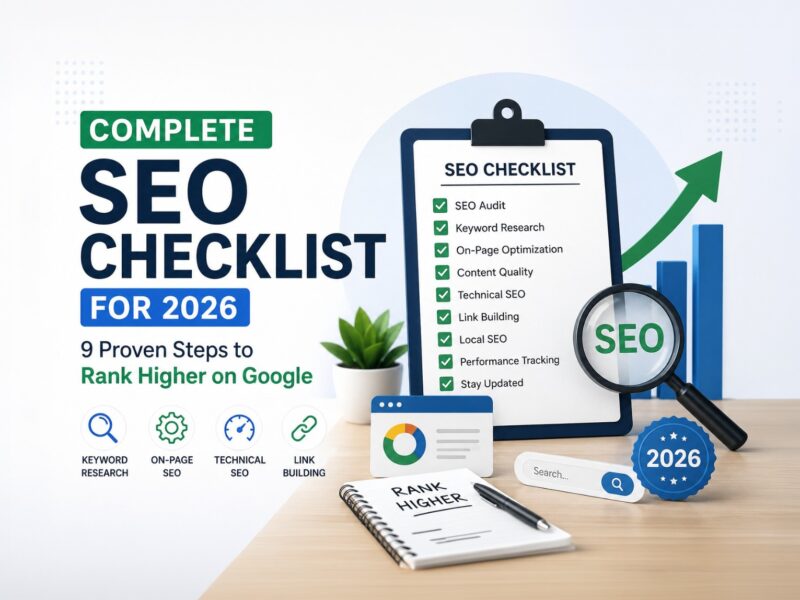
SEO is constantly evolving, and staying ahead of Google’s algorithm updates is essential for improving your website’s visibility. Whether you’re running a business website, an eCommerce store, or a personal blog, following a structured SEO checklist can help you increase organic traffic, generate quality leads, and achieve higher search rankings. SEO Checklist for 2026 is your complete guide to improving your website’s visibility and ranking higher on Google.
Why You Need an SEO Checklist for 2026
Search engine optimization is constantly changing, and Google’s algorithms continue to prioritize websites that deliver a fast, secure, and valuable user experience. Without a clear SEO strategy, your website may struggle to rank well, attract visitors, or generate quality leads.
An SEO Checklist for 2026 helps ensure that every important aspect of your website is optimized—from keyword research and technical SEO to content quality and page performance. By following a structured checklist, you can identify issues early, improve your search engine rankings, and create a better experience for your audience.
Whether you’re a business owner, marketer, or website developer, regularly following an SEO checklist can help you:
- Improve your Google search rankings
- Increase organic website traffic
- Enhance user experience and website performance
- Generate more qualified leads and conversions
- Stay ahead of competitors with the latest SEO best practices
In this guide, we’ve compiled a simple yet effective 9-step SEO checklist for 2026 to help you optimize your website and stay competitive.
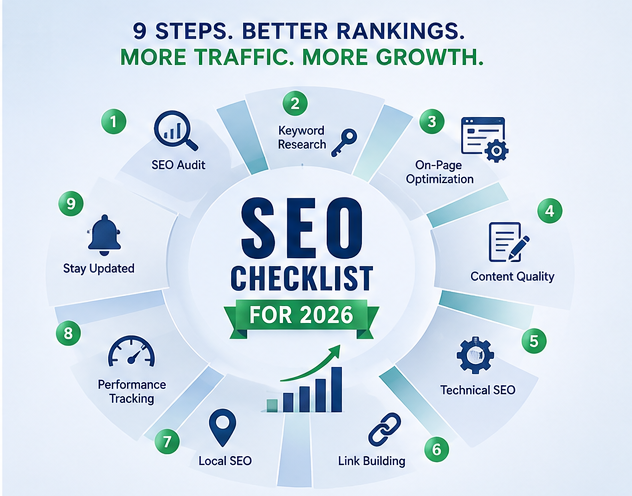
1. Perform a Complete SEO Audit
Before making any changes, analyze your website to identify technical and content-related issues.
Check for:
- Broken links (404 errors)
- Missing title tags and meta descriptions
- Duplicate content
- Crawl and indexing issues
- HTTPS security
- Mobile usability
Recommended Tools:
- Google Search Console
- Google Analytics 4
- Google PageSpeed Insights
2. Research the Right Keywords
Keyword research is the foundation of every successful SEO strategy. Focus on keywords your target audience is actively searching for. Include:
- Primary keywords
- Long-tail keywords
- Local keywords (if targeting a specific location)
- Question-based keywords
Use keywords naturally throughout your headings, content, and image alt text.
3. Optimize On-Page SEO
Every page on your website should be properly optimized. Make sure to:
- Write compelling title tags (50–60 characters)
- Create engaging meta descriptions
- Use one H1 heading per page
- Organize content with H2 and H3 headings
- Add descriptive image alt text
Well-structured pages are easier for both users and search engines to understand.
4. Create Helpful, High-Quality Content
Google rewards content that provides genuine value to readers. When writing blogs or website pages:
- Answer users’ questions clearly
- Keep content original and informative
- Use simple language
- Include examples and actionable tips
- Update older content regularly
Quality content builds trust and encourages visitors to spend more time on your website.
5. Improve Website Speed and Mobile Experience
A slow website can increase bounce rates and negatively impact rankings. To improve performance:
- Compress images
- Use WebP image format
- Enable browser caching
- Minify CSS and JavaScript
- Ensure your website is mobile-responsive
A fast and mobile-friendly website provides a better user experience and supports better SEO performance.
6. Build Internal and External Links
Link building helps search engines understand your website structure and authority. Best practices:
- Link to relevant pages within your website
- Use descriptive anchor text
- Earn backlinks from reputable websites
- Avoid spammy or low-quality links
Strong internal and external linking improves both SEO and user navigation.
7. Optimize for Local SEO
If your business serves a specific city or region, local SEO is essential. Don’t forget to:
- Optimize your Google Business Profile\
- Use location-based keywords
- Maintain consistent business information
- Encourage customer reviews
- Add local business schema
Local SEO helps nearby customers discover your business more easily.

8. Monitor Website Performance
SEO isn’t a one-time task. Track your website’s performance regularly to identify opportunities for improvement. Monitor:
- Organic traffic
- Keyword rankings
- Click-through rate (CTR)
- Bounce rate
- Core Web Vitals
- Indexed pages
Reviewing this data helps you make informed decisions and refine your SEO strategy.
9. Keep Your SEO Strategy Updated
Search engine algorithms change frequently, so staying up to date is essential. Regularly:
- Refresh outdated content
- Publish new blog posts
- Fix technical issues
- Monitor Google algorithm updates
- Improve user experience
Consistent optimization ensures your website remains competitive in search results.
Conclusion
SEO success doesn’t happen overnight, but following a structured checklist can significantly improve your website’s visibility over time. By performing regular audits, creating valuable content, optimizing technical elements, and monitoring performance, you’ll build a strong foundation for long-term organic growth.
If you’re looking for a creative partner to strengthen your digital presence, The Vanilla Theory can help. From brand storytelling and content strategy to design and marketing support, Vanilla Theory creates thoughtful solutions that help businesses stand out online.
Whether you need a fresh brand identity, engaging content, or a stronger online strategy, The Vanilla Theory brings creativity and clarity together to help your brand grow with confidence.


